

As war swept across Bosnia, the VRS were quick to capture much of the country's east, including the town of Vlasenica.
Before the war, Bosniak Muslims made up approximately half of Vlasenica’s population, but as Republika Srpska’s campaign of ethnic cleansing overtook the town, that percentage would rapidly decline.
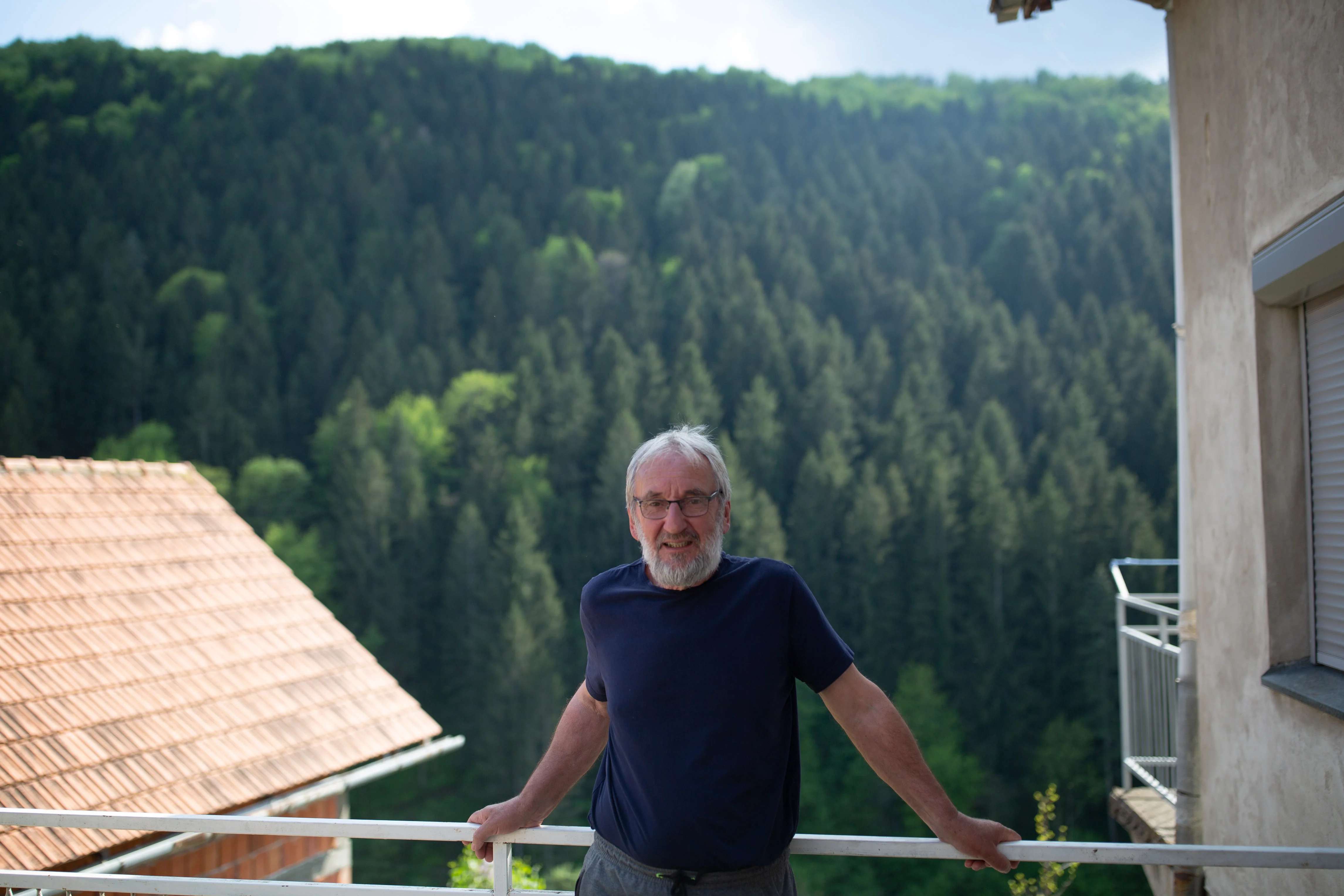
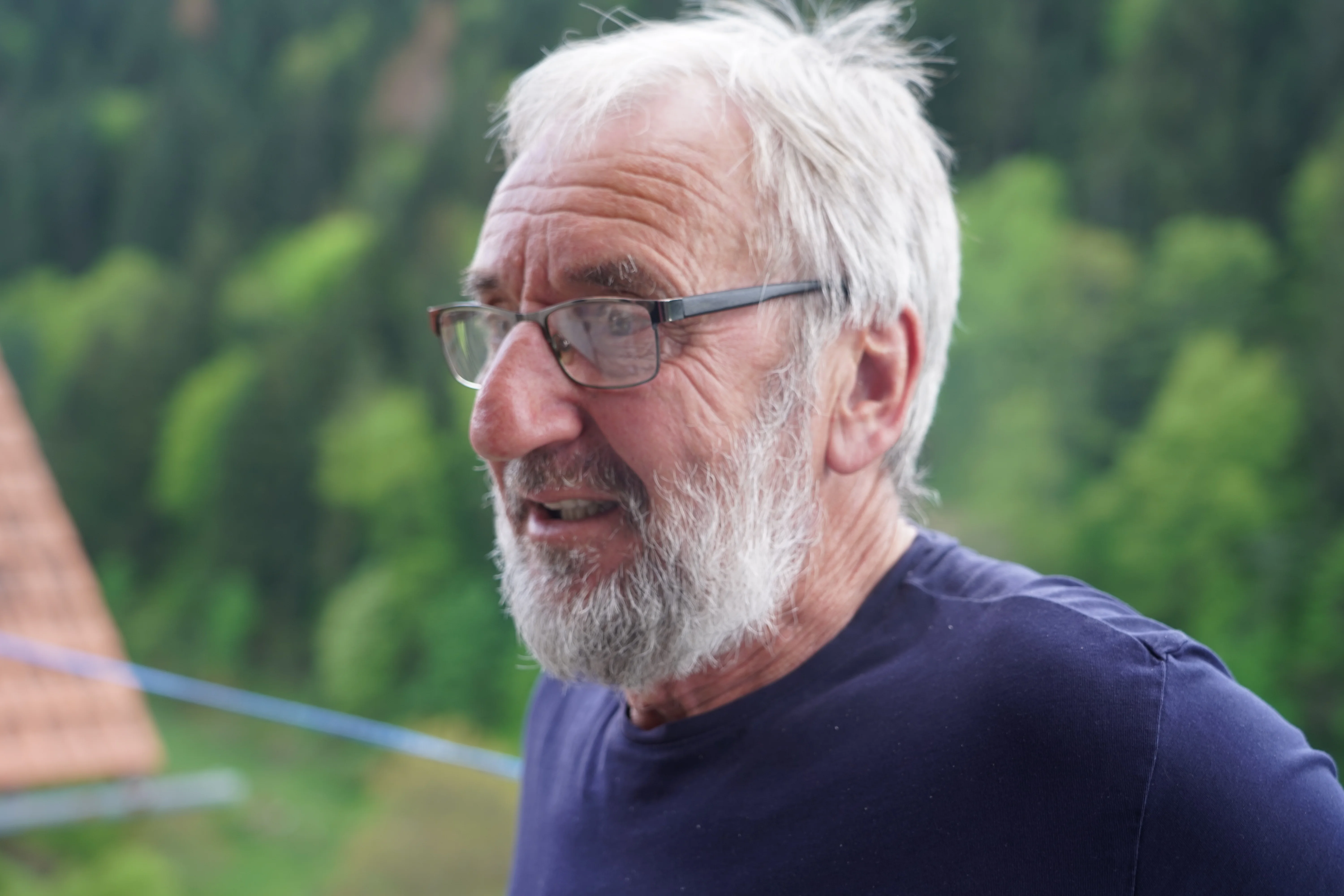
Avdo is a 70-year-old man born and raised in Vlasenica. After watching Milosevic promoting Serbian nationalism and ethnic hatred in a speech delivered on live television and broadcast in 1989 from what is now Kosova, Avdo felt things in Vlasenica begin to change.
“I remember his words.
"I remember that to this day, like I’m hearing those words now.
“1, maybe 2, days later, Milosevic’s pictures started showing up [around Vlasenica]. And some individuals, who didn’t know me well and thought I was a Serb, spoke openly around me at work, and I happened to overhear their conversations supporting Milosevic.
“That’s when I felt that it was already beyond a joke, that it was the beginning of something. In my opinion, it all started with Milosevic.”
After war broke out in April 1992, it didn’t take long for the conflict to reach Vlasenica, and, after witnessing heavy weaponry being transported through the forest surrounding the town, Avdo evacuated his family.
“I was sitting alone in a cafe when an old man who lived through World War II approached me. After we greeted each other, he started talking a bit, chatting, and then he asked me, ‘What are you waiting for? Why don’t you go?’
“I said, ‘I’m not guilty of anything, I haven’t wronged anyone.’ He said in these words, ‘Don’t you see, they [Serb neighbours] are betraying us. They sold us out.’
“I came home, after thinking and thinking. Then I went down to the station. I found a taxi driver and asked, ‘Can you take my wife and children to Kladanj [a town 19 miles away]?’
“He said, ‘Yes, I can, for 100 German marks.’ Which was a lot of money back then.”
Avdo stayed behind and, as an experienced mountaineer, decided he would make his escape by travelling through the mountains. He wouldn’t be able to escape before experiencing tragedy, however.
“I saw it with my own eyes, I saw it up in the marketplace in the centre of town.
“The weapons were being distributed on the day it all went crazy, the infantry weapons were being handed out.
“2 of my brothers were killed there. My uncle too, he was killed. My aunt was killed. Their families... I don’t even know how many were killed in my family.
“It was terrible. It was really terrible, terrible.”
While Avdo was evacuating his family and ensuring their safety, Avdo’s father was abducted, tortured and murdered. The soldiers left his body for his family to find.
“[My sisters] went to visit my father and found him dead in bed. 7 bullets had been fired into him from a pistol. There’s nothing they didn’t do to him, you understand?
“And that’s what I want to tell you. That abuse, that torment they put him through, that’s what hurts me the most.
“They were looking for my son-in-law, but first, they beat my father to make him say where he was.
“They were demanding [he give me up] as well. They took my sister to Susica Camp [a concentration camp] and questioned her, asking, ‘Where is bradonja [the bearded one].’
“They beat my father, and that’s what pains me the most. I can get over the deaths, but the torture, the abuse… the cruelty they inflicted on him, that’s what’s hard for me.
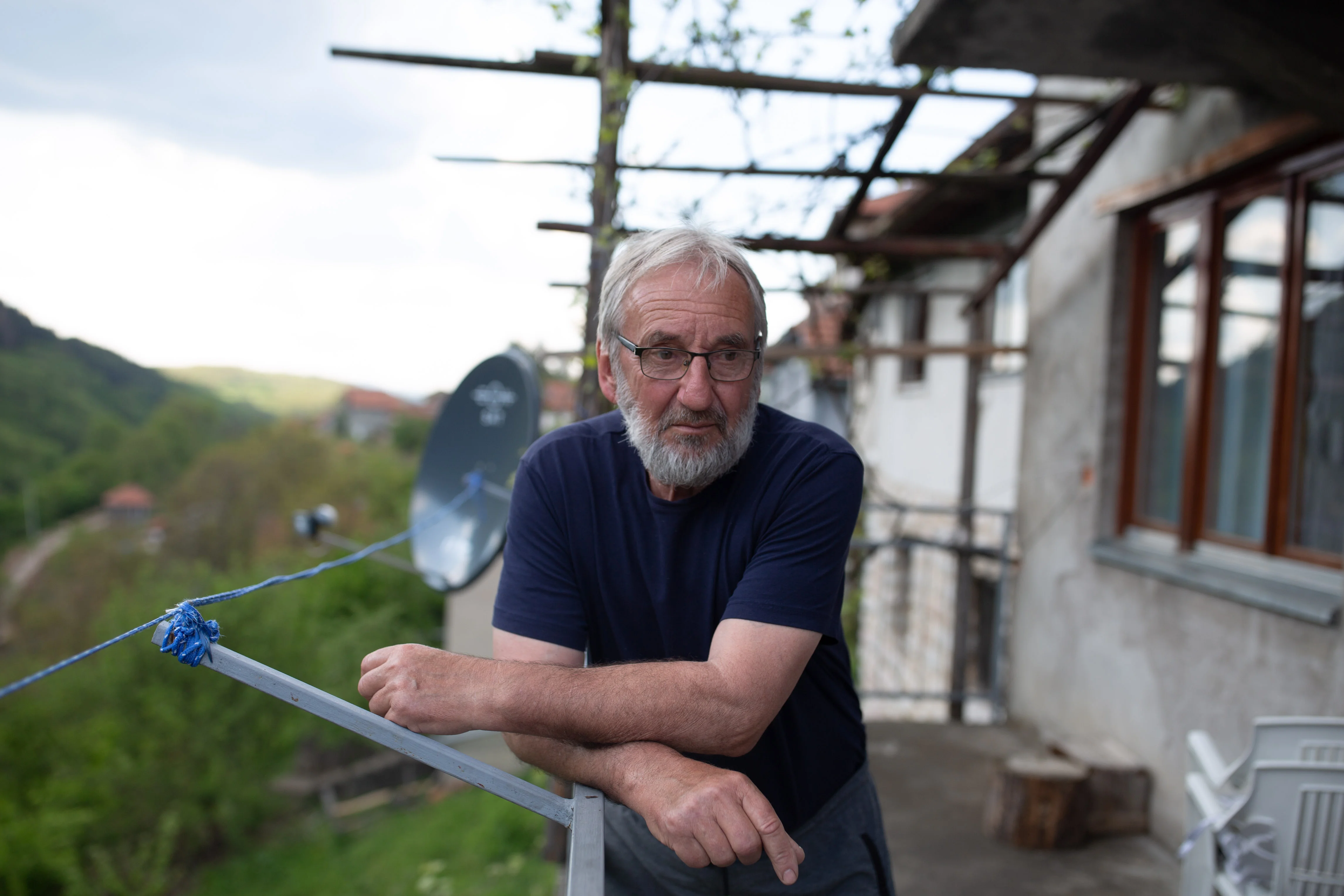
Avdo's father was among thousands of Bosniak Muslims and other civilians from Vlasenica and surrounding villages killed or detained at several locations around the town - the most notorious being Susica, where as many as 8,000 people were detained.
“Often, when I pass by Susica Camp, and I go often, almost every day. I stop for a moment and think about what happened there. I didn’t see it myself, but a person can imagine what went on. And it weighs on me.
“It’s hard for me. It’s not hard for me to live, because I’m on my own land, but I don’t want to talk to neighbours anymore, I won’t talk to them.
“I won’t say 'hello', or 'goodbye', or ‘God help you’. Nothing. I live my own life.”
After spending much of the war living near Kladanj, Avdo and his wife eventually returned home to Vlasenica, where they still owned property.
“I have spent my whole life in Vlasenica, besides that period of 10 years between 1992 and 2002 when I was forced to flee against my will.
“In 2002 I returned to this address. My wife and I are alone here as my son and daughter live abroad in France. I have 5 grandchildren now.
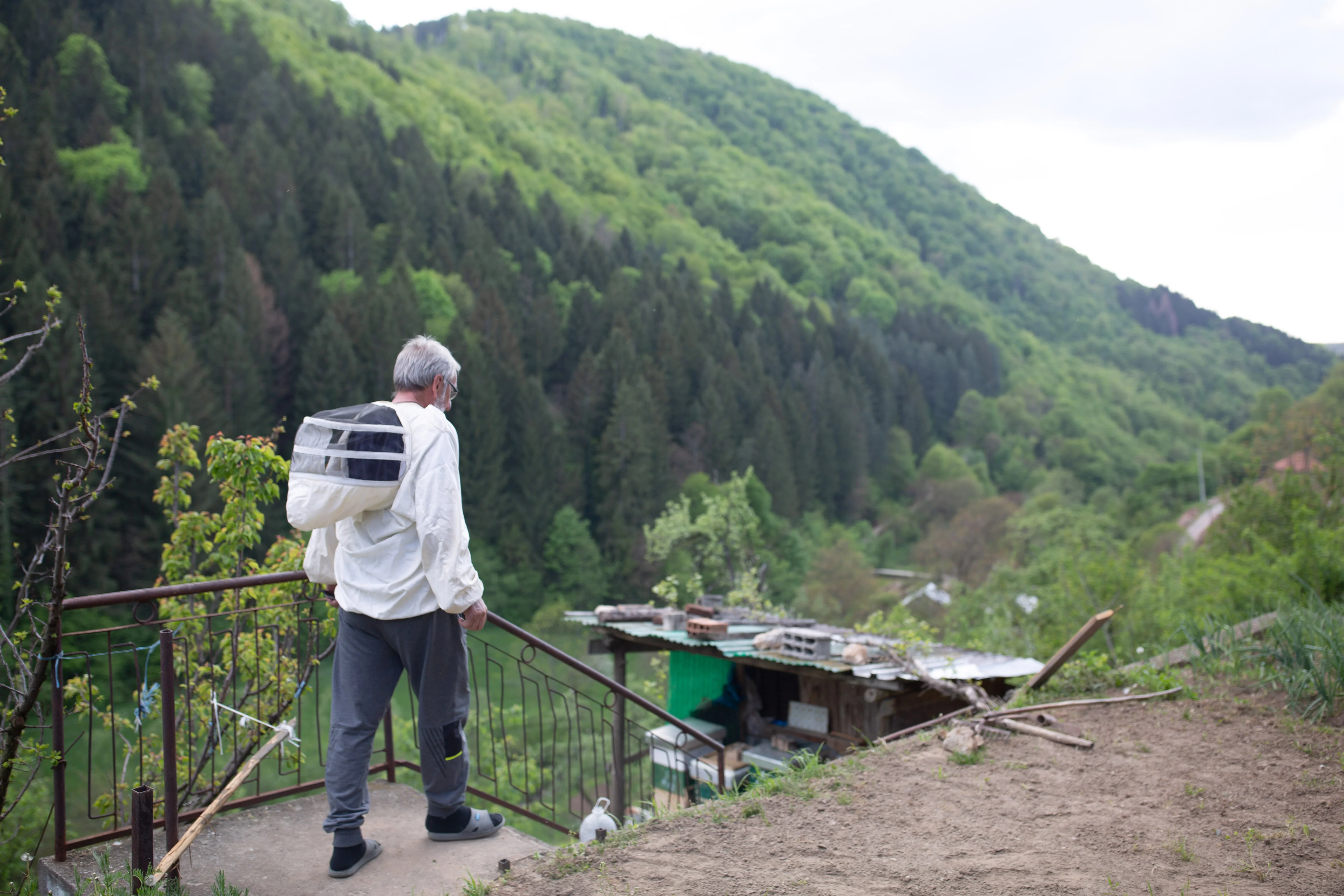
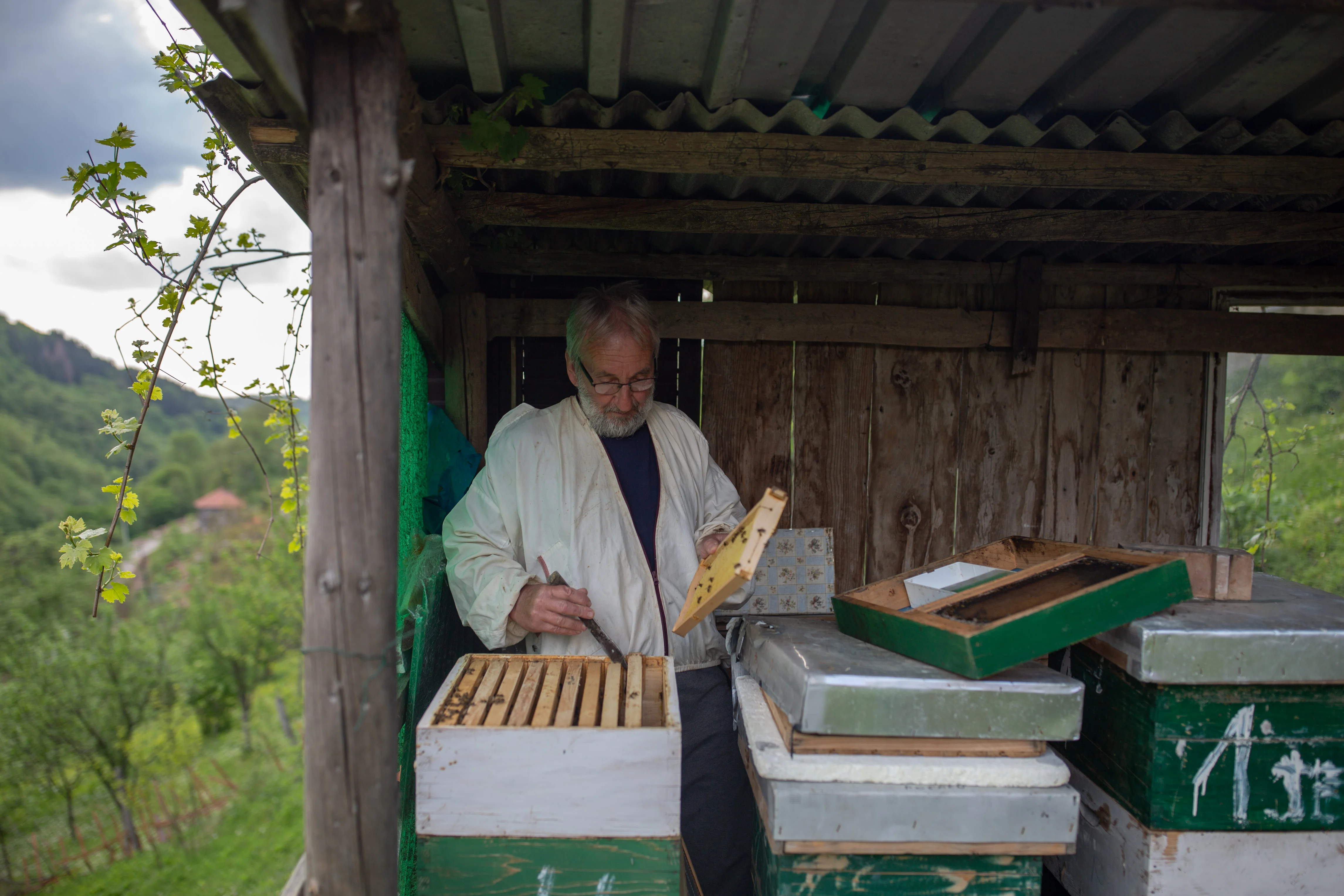
“I have land, I have fruit plantations, I have bees. I have lambs and sheep, I don’t sell the lambs, I just keep them for myself, and that’s how I live. I feel content in my soul.”
Avdo provides for himself and his wife, but also receives food and hygiene packs through an Islamic Relief programme that supports survivors of the Bosnian War. He is grateful for more than just the items in the packs.
“We returnees have no one to turn to. We have no one here.
“For example, we wish someone would come to hold a meeting in the mosque, the hotel, or anywhere, so we could share our problems and impressions. Everything would be different, everything would be better, it would be better for us because we feel abandoned.
“No one cares about us, only you [Islamic Relief] do, through [providing] those packages, and I’m grateful for that.
“When Elvira [an Islamic Relief aid worker] started coming, it was good. She would introduce herself, explain who she was, where she was from, and everything. That was great!
“Some others [aid agencies] just come, don’t say anything, tell you where to sign, take pictures, and then leave.
“Every bit of help [from Islamic Relief] is welcome. Every single bit of help.”