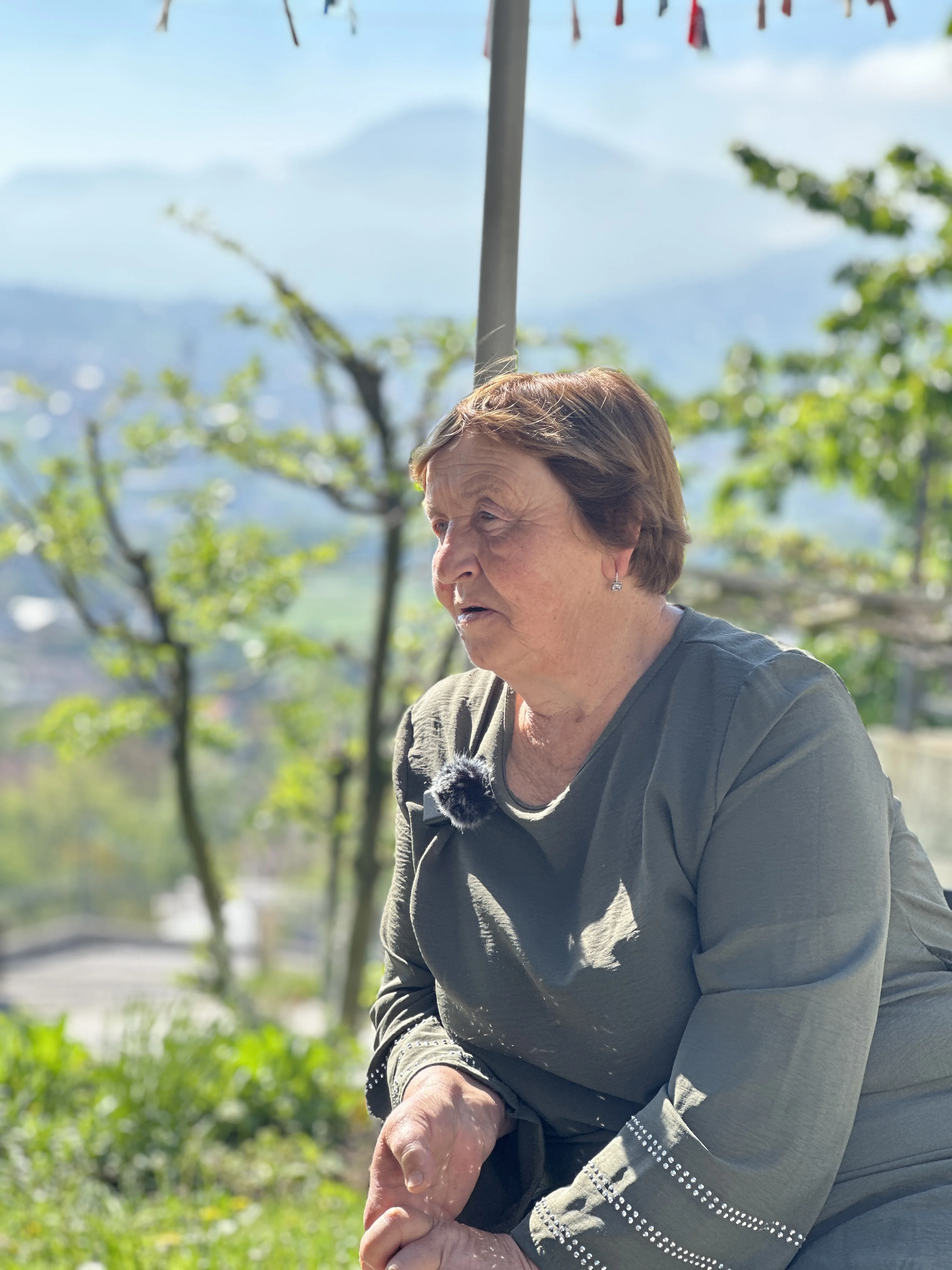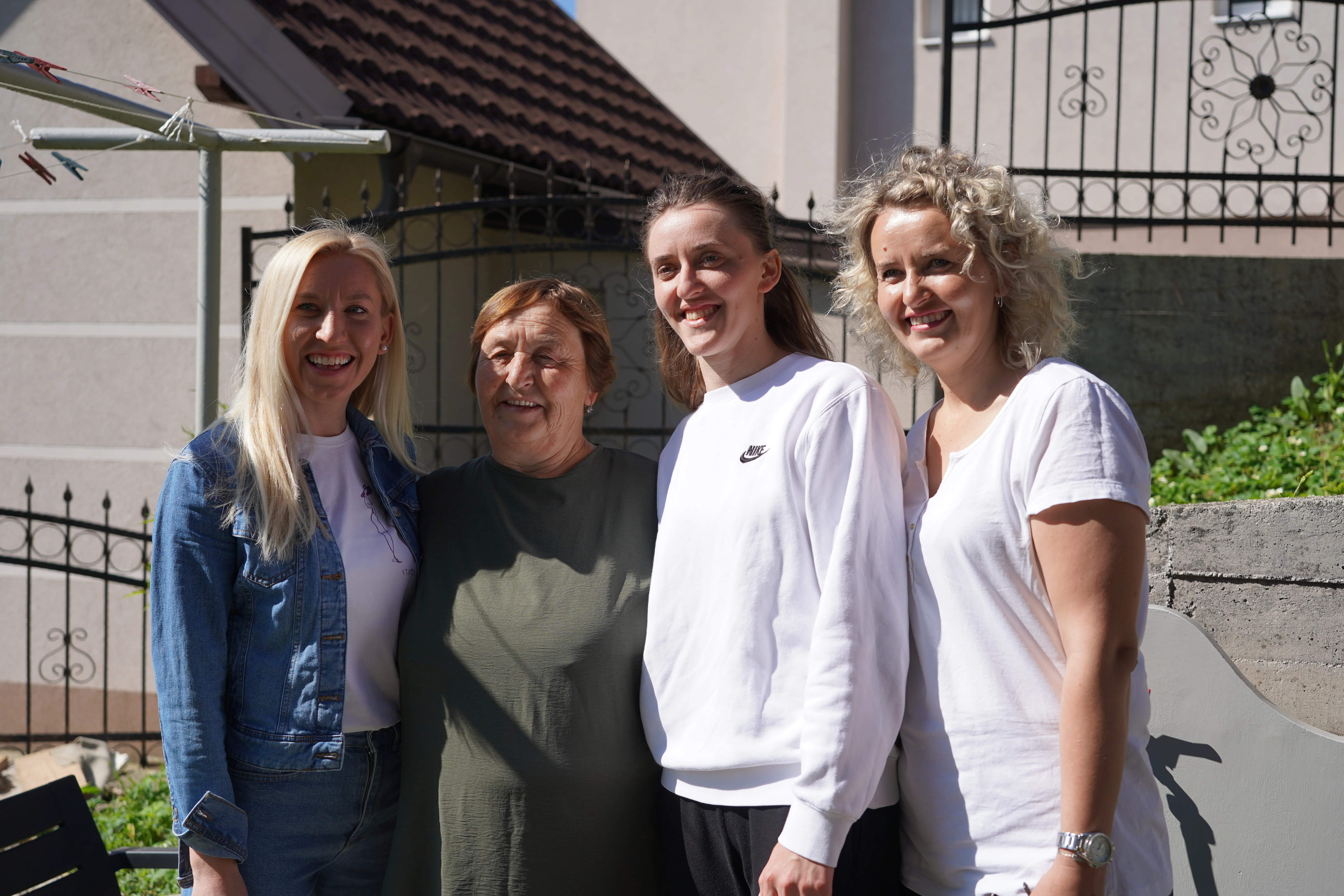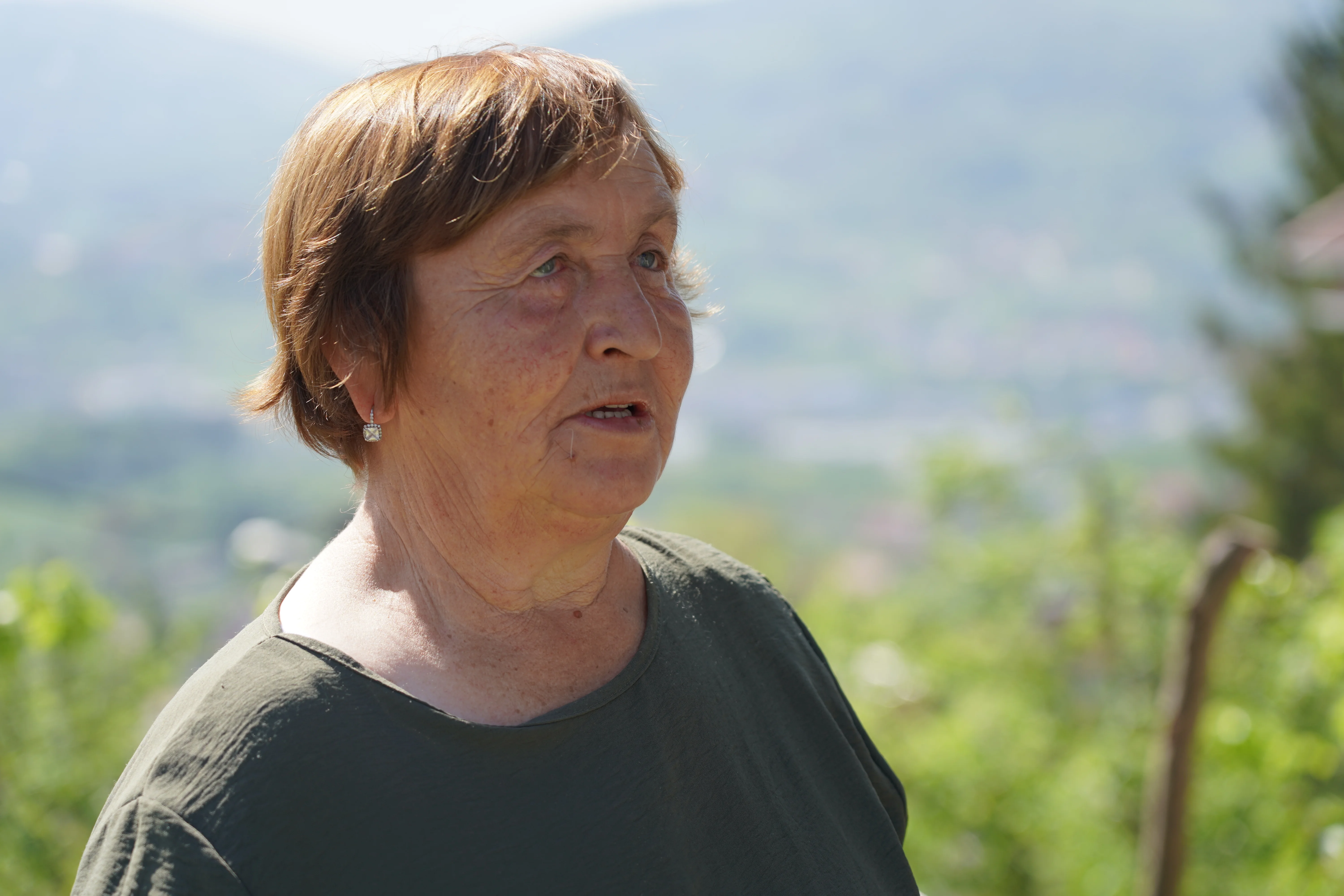


“I am Bida, born in 1966. I think I’m 58 years old. I’m from Srebrenica. I live with my children: 4 daughters. My husband didn’t make it out of Srebrenica.
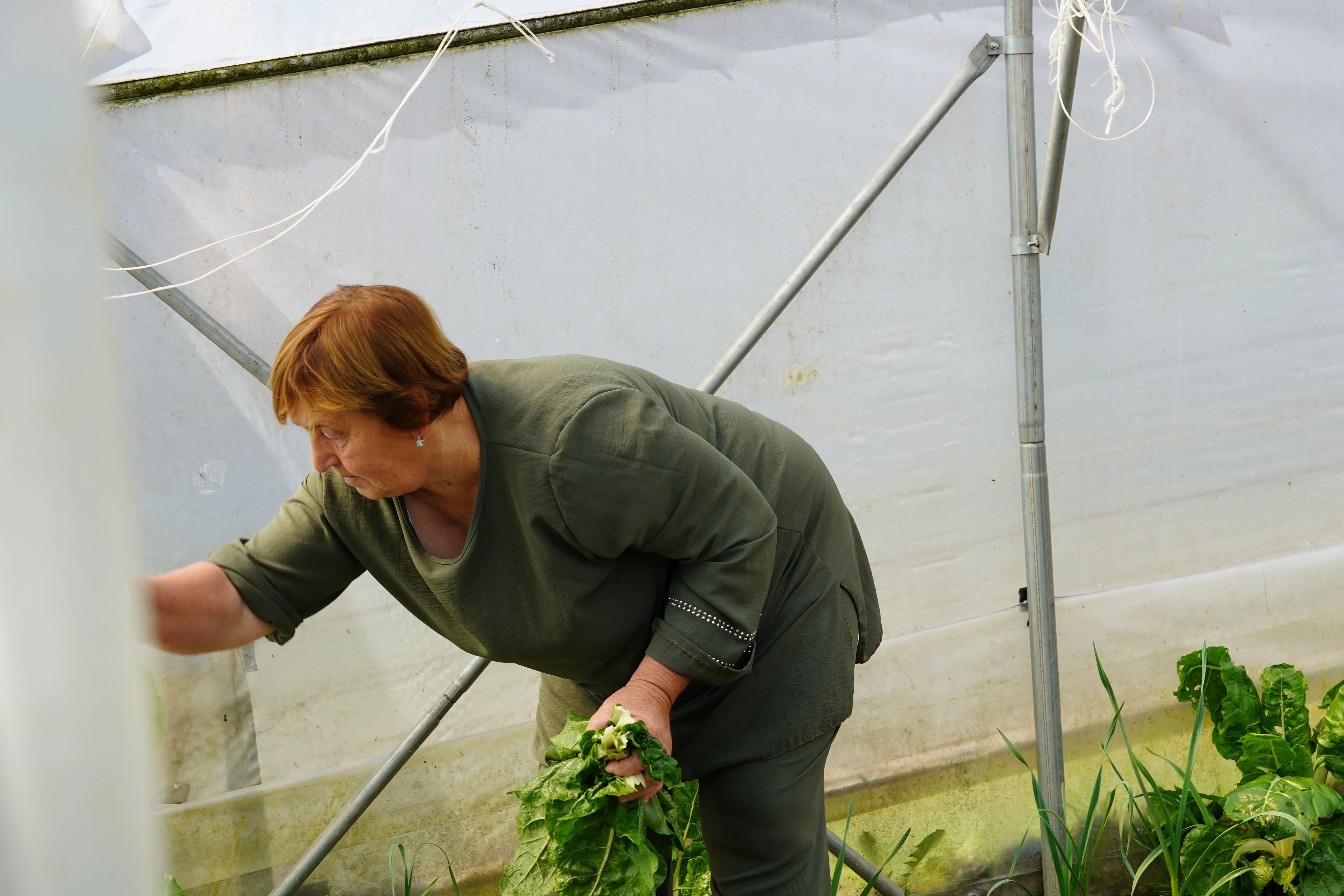
"I have a greenhouse, I have some income from that. I receive a minimum pension and my husband's disability benefit, around 1,000 Bosnian Marks (approx. £426) a month.
"My youngest daughter was supported as an orphan [by Islamic Relief, from whom] I took out interest-free loans, they really helped me. I also received a greenhouse from Islamic Relief.
"I’m truly grateful to Islamic Relief. They really went out of their way for me, truly.”
Bida grew up in a town called Joseva, not far from the city of Srebrenica, and remembers a happy childhood.
“We had a father, a mother, and 7 of us children. Before the war, we were all married and had our own families.
"It was beautiful, simply beautiful, thank God. We didn’t want for anything, really. It was a good life. We went to school regularly, we lived like normal people, we worked. And that’s how it was.”
Everything changed for Bida and her family once the war started.
“My strongest memory is the beginning of the war, when you weren’t prepared for anything. I remember people going out with makeshift rifles, building barricades and guarding houses in the village, all to defend ourselves.
"A lot changed from that early time. First of all, because you couldn’t even sleep in your own house.
"We had a car, and for several days we would go into the forest and hide like fugitives. I slept in the car while I was 7 or 8 months pregnant with my third daughter. I gave birth to her at the beginning of the war.
"You’d take everything out of the house, come back, but you couldn’t light a fire inside, [in case] they could see the smoke.
"Life just wasn’t the same anymore.
"It was hard. Very hard. The children were small. I lived with my husband and mother-in-law. He had to go to the front line, once the army got a bit more organised.
"I was left alone. I prayed to God that nothing would happen, that he would come back, that we’d be alive and well. It was all very difficult. Still, somehow, we managed until the fall of Srebrenica.
"But after the fall of Srebrenica, that was truly catastrophic.”
Bida recalls the last time she saw her husband alive.
“2 days before the fall, my husband said, ‘I’ll take you to your family, that’s the safest place for you. Wherever they go, you won’t be left behind.’
"That was the last time I saw my husband.
"He went into the forest, and I went to my family. I spent 2 nights there, I think, I can’t remember exactly. After that, we went down to Potocari.
"That’s when Srebrenica fell.
"The men had to go through the forest, and we had to go to Potocari, down to the UN base [there]. I went down with my children and my family. I stayed there for 2 nights. I didn’t see anything myself, but I heard yelling at night in Potocari. Yelling, screams, cries.
"I didn’t see it with my own eyes because I couldn’t move much, I was with my children.
"On the third day, they started picking us up in buses. My brother’s wife was there with her children, I had my children, and I was pregnant. She said to me, 'Bida, I can’t manage the children anymore, will you come with me to the bus? [It will] transfer us to Tuzla.'
"That is what they told us, that they would take us there, because there was no life left for us there. They had taken over Srebrenica – the Serbs had already entered the town. You had to leave everything behind or die.”
Bida remembers the journey from Potocari vividly.
“We were traveling from Bratunac toward Konjevic Polje. I started noticing that the buses and trucks ahead of us were disappearing. There were none ahead. I said to my sister-in-law, ‘What’s happening? Where are the buses?’
"She just looked at me, and said, ‘Be quiet, Bida, and don’t look.’
"I realised they were diverting them somewhere. Taking people wherever they wanted to take them.
"When we arrived in Tisca and got off the bus, we had to walk 2 or 3 kilometres through a buffer zone to reach our military lines.
"The buses took Bida and her children to the village of Tisca, more than an hour away from Srebrenica. They were forced to walk for 3 kilometres though a buffer zone, strewn with landmines, in order to reach Bosniak territory. Before reaching safety, the family were confronted by more VRS soldiers.
“There were 3 or 4 men sitting there, and my sister-in-law said, ‘Take the kids and the water, I’ll try to make it somehow.’
"Just imagine me, 6 children – 3 hers, 3 mine – and I was pregnant.
"One of the men sitting there looked at me and asked, ‘Are all those your children?’
"I said, ‘No, they’re not all mine.’
"And he said, ‘If they’re all yours, leave 1 for us.’
"I just pulled the kids close to me, like a mother hen with her chicks. I just kept walking.”
Bida and her family were sent to Huskic, a neighbourhood near Tuzla. Eventually her brother joined the rest of the family and found houses for them to live. There, Bida waited for news about her husband.
“In the beginning we truly believed [the men] would return... I don’t even like to remember it.
"Time passed, and there was nothing. It was not easy. I don’t like to think about it. It is hard when you had everything, and then suddenly, you have nothing.
"In the beginning I had to ask others even for the smallest thing. It’s hard because you don’t get used to that. That is not easy to go through. But we survived. Not just me, all of us. We survived.
"One night, people arrived through the woods, and we heard news [from them], like someone had seen someone, a familiar face.
"My brother came to me and said someone we knew had seen Kadir, my husband, at the crossing point where people passed from their territory to ours.
“He said if everything went well, he might cross it that night.
"I stayed up all night with the window open, watching and hoping he would appear, that he would come, that he would cross. But he never did."
Bida’s husband’s remains were eventually found in 2006, and he is now buried in the Srebrenica Memorial Centre in Potocari.
“The same year I buried my husband, I lost my mother. It was very painful.
"I went to a psychiatrist. The psychiatrist told me that what I was going through could happen to anyone.
"But for me, it was overwhelming.”
Bida and her children visit the centre every now and then and, since the end of the war, have also visited their old house in Joseva.
“The first time I went back to where I had been married, I sat in my garden. It was a big garden. My whole life replayed in my mind, just like watching a videotape.
"I remembered how beautiful and peaceful life used to be, how the children were there with me.”